
Lean Six Sigma 30 Years Later: The Discipline AI Still Needs
Six Sigma is thirty years old. It may look unfashionable, but it builds exactly the disciplines AI now depends on: process mapping, simplification, data quality, and statistical thinking.
I joined GE in 1999 as a Black Belt. My first project was not glamorous: reorganizing a 50-person call center. I categorized the calls, mapped how they actually flowed, measured where time and quality were lost, simplified the work, and put controls in place to make the improvements last. I did not know it yet, but that unglamorous toolkit would follow me through every integration, turnaround, and transformation I have led since.
Three years earlier, in 1996, GE had launched Six Sigma company-wide, and the first year was not, by the numbers, a success. The company invested 200 million dollars and saved 170 million. Most CFOs would have quietly buried the program. Jack Welch did the opposite. In 1997 he doubled down and changed one thing: leadership bonuses were tied to Six Sigma results. Not training hours, not participation. Results. That year GE invested 400 million and saved 700 million, and over the first five years, the program reportedly delivered $12 billion in cumulative savings
The program was identical in 1996 and 1997. The compensation system was not. I have carried that lesson into every transformation since: no operating discipline survives on enthusiasm. It survives on accountability and incentives.
Destroy Your Business
The part of the story people forget is that Six Sigma at GE was never just about defects and cost. Shortly after I joined, I became part of an initiative with a name only Welch would approve: Destroy Your Business.
The idea was simple and slightly terrifying. Welch was very impressed by Amazon, then an online bookstore, and he did not want GE to become the next Barnes & Noble. So every business was told to attack itself before a digital competitor did: rethink, in the emerging internet age, how it sold, served, and operated, as if it were the disruptor.
Lean Six Sigma turned out to be the perfect instrument for it, because digital transformation, then as now, meant rethinking all of our processes. You cannot put a process online by simply copying the old way of working. It first has to be simplified, automated where possible, and rebuilt around the needs of a digital customer.. You cannot simplify a customer journey you have never mapped. The method gave thousands of teams a common way to take work apart and rebuild it for a new channel.
Past the 12 billion in savings, that is the legacy the case studies miss: Lean Six Sigma was instrumental in GE’s digital transformation. Thirty years later, companies are having the exact same realization about AI, usually after the pilots stall.
How the Lean Six Sigma Method Grew Up
I became a Master Black Belt in 2005 and by then the methodology had changed. Watching that evolution from inside taught me as much as the tools did.
The Master Black Belts were no longer statistical specialists. They were mostly C-suite people, executives who sat on the leadership team and had been Chief Sales Officer or COO. The rationale was deliberate: put the method in the hands of people who would get the most impact, who were legitimate in front of the organization, and who had the weight to make change happen fast. Process improvement stopped being a staff function and became a leadership responsibility. That single design choice explains more of GE’s results than any tool in the toolbox.
The complex statistics were dropped. Six Sigma quietly went away and the focus moved to Lean and simplification: flow, waste, speed, simplicity. Less mathematics, more common sense with discipline.
And the Green Belts multiplied. The Green Belt, a GE invention, was a line manager trained in the methodology and carrying a real project, not a full-time specialist. That was the adoption engine: hundreds of managers close to the people actually doing the job, improving the work they owned. Change imposed by experts gets tolerated. Change carried by your own manager, on your own process, gets adopted.
Simplify the method, put executives behind it, and push it to the people who do the work. Every transformation I have run since follows those three rules, whatever the label on the program.
What Lean Six Sigma Really Teaches
Strip away the certifications and the jargon, and the method comes down to a few habits that have never stopped paying.
Map the process as it really runs, not as the manual describes it, with its rework loops, workarounds, and the seven approvals nobody remembers instituting. Half the value is discovered during the mapping, before anything is improved.
Measure before you decide. The method forces the question most management cultures skip: how do you know? In my call center project, the problems everyone “knew” were staffing problems turned out, once measured, to be process and routing problems. Opinions rarely survive contact with data.
Trust the measurement system before the measurements. Six Sigma checked that the data itself was reliable, consistent definitions, consistent collection, before analyzing anything. That is data governance, a decade before anyone used the term.
Watch variation, not just averages. Two processes can share an average while one is stable and the other swings wildly, and the swings are where the cost and the customer pain live. Once you learn to see variation and to separate signal from noise, you read every report differently for the rest of your career.
And control, the phase everyone skips. An improvement without an owner, a metric, and a response when it drifts is a temporary fix. Most failed programs I have seen did everything except make it stick.
Exactly What AI Needs Now
Put those habits next to what makes AI deployments succeed or fail, and the overlap is almost embarrassing.
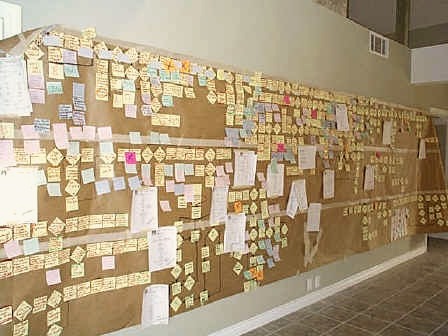
AI automates workflows, so the workflow must exist: one standard way of working, exceptions defined. Companies discover during AI deployment that there is no standard to automate. A Black Belt would have discovered it in week one, , using brown paper and Post-it notes.
Models learn from data, so the data must be trustworthy. A model trained on inconsistently coded transactions industrializes the inconsistency. That is the old measurement-system lesson, returned with a bigger invoice.
Model outputs are statistical, so leaders need statistical literacy. A generation of GE managers learned why small samples lie and why one good month is noise. Executives who never absorbed that are now evaluating probabilistic systems on demos and anecdotes, and vendors know it.
And deployed models drift, so they need monitoring, thresholds, and an owner. The industry calls it MLOps. It is the Control phase, rebuilt at ten times the price.
Why I Still Use It
Here is the practical test, thirty years on: most of the companies I talk to still use the methodology to some extent, whether they advertise it or not. And I keep using the framework myself, in a simplified form, on integration recoveries, working capital programs, ERP migrations, and now AI foundations.
Not out of nostalgia. Because clients need a structure, and teams need a simple methodology they can understand and follow. When a business is in trouble, the last thing it needs is an improvised approach that lives in one consultant’s head.
As one of my bosses used to say: you cannot fix what you cannot measure. And the methodology is simple. Map your process. Measure the performance. Identify what affects it. Find the root causes. Fix them. Measure the progress. Make sure the performance sustains. Then run the loop again for the next improvement. Eight steps anyone can follow, from the executive committee to the warehouse floor. People trust a method they can see.
Every new technology seems to promise that the old rules no longer apply. Then companies spend years learning them again. The belts may have disappeared and the language may have changed, but the basics have not: clear processes, reliable data, and an understanding of variation. The companies that will get real value from AI are the ones still doing this work. They just do not talk about it anymore.